Saturday, November 2, 2013

-Learning- "Capturing the Festival of Lights"

(From the Archive, with some modifications)

-Learning-
Capturing the Festival of Lights

Deepawali is an important festival of India. This festival is full of illumination and enjoyment.  We have an ideal opportunity for interesting photographs on this occasion. With a few points in our mind, we can click memorable images of this occasion.

* As this festival is celebrated during late evening part of the day, we have to set the ISO of our camera at a high point (400 or onwards). This will help us capturing the festival properly. If we are shooting the firecrackers, we should under expose the photograph a little in order to enhance the details and hues.

* Illuminated and decorated cities offer opportunity for excellent photographs. Here also, we should use a high ISO. If we wish to have noise free photographs, we should use a low ISO. In such case we have to rest our camera on a tripod. This will avoid camera shake and will result into sharp pictures. Along with a low ISO we can set a small aperture to achieve a good depth of field. But In such case moving objects will tend to blur. Sometimes blurred moving objects add fantastic effect to the picture. Use of a wide angle lens is very friendly in capturing illuminated streets or buildings.

* Using a high view point often gives fantastic results.

* Shooting colourful electric bulbs with utterly low shutter speed with intentional camera shakes occasionally results into magical results. For this point, we have to set a low shutter speed (such as 1/15 sec. or 1/30 sec.) with a low ISO setting. Now by aiming at an appropriate illuminated decoration, we have to do two things at the same time, pressing the shutter releasing button and shaking the camera randomly. We can repeat this act twice, thrice or more. This will result into some pretty graphical images.

* People busy in different activities can also be our subject. Here we have to use a slight high ISO. In this situation we can use camera flash also.

* Our aim should be to capture the true feel of this festival.

* Apart from above technical points, the visual sense, presence of mind and fine skills of a photo artist will help in creating marvellous Deepawali Photographs.

--Dr. Pankaj Sharma


Tuesday, October 15, 2013

Photo Gallery: Different Strokes:The Best of 7th IIPC World Photography Day Annual Photo Contest-2013

-Photo Gallery- 
Different Strokes
The Best of 7th IIPC World Photography Day Annual Photo Contest-2013
The 7th IIPC World Photography Day Annual Photo Contest-2013 concluded with numerous sweet memories in the mind and soul of art lovers. A good number of entries from about 60 participants of 13 states of India were received in this contest. Out of them, 10 images got Awards, 17 received Certificates of Merit and 254 images got Acceptances. The art lovers welcomed the event with great zeal.  The creative works of the participants attracted the visitors deeply.
The exhibition of the selected images was organised by Photo Vision, Bareilly in IMA Hall on 18 and 19 August-2013.

(The detailed report of this event has been published in one of our previous posts)

Here are the Award Winning images for your delight.

--Dr. Pankaj Sharma,
Contest Chairman

Twin Carriers (Award-B/W Pictorial Section)
M. V. Rao, Bandarulanka

Friends (Cash Award-B/W Pictorial Section)
Sk. A. Sharief, Bhadrachalam

Liquor Wander (Award-Colour Pictorial Section)
Sk. A. Sharief, Bhadrachalam

Joyful Ride (Cash Award-Colour Pictorial Section)
V.K.R.S. Sarma, Nedunuru

Tiger with Bandhavgarh (Award-Nature Section)
B.C. Manjappa, Bangalore

Fish in Beak (Cash Award-Nature Section)
Manoj Kumar, Delhi

Water Rippling (Award-Photo Journalism Section)
Vaibhav Jaguste, Thane

To Win (Cash Award-Photo Journalism Section)
Venkateswarlu Kola, Kodad

Flower Valley (Award-Photo Travel Section)
Anup Sah, Nainital

Bird's Eye View (Cash Award-Photo Travel Section)
Dr. Anupam Sharma, Bareilly

Sunday, September 22, 2013

-My Experience- Tiny Creatures and Close-Up Lenses

-My Experience-

Tiny Creatures and Close-Up Lenses


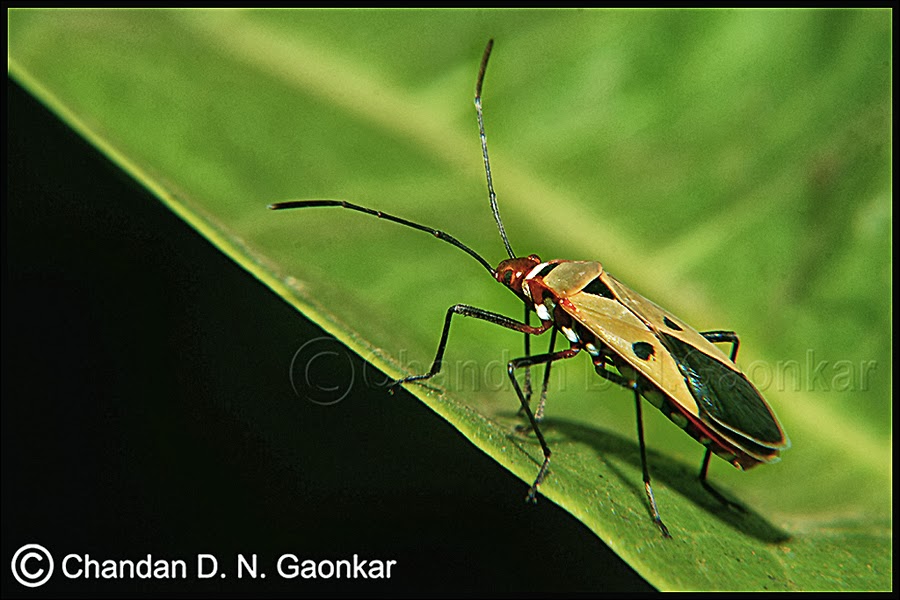
Mr. Chandan D. N. Gaonkar of Panaji (Goa-India) is an emerging photo artist. He has been a contributor for our blog since its inception. This time he is before us with his experience about clicking tiny creatures with close-up lenses. This technique is quite simple and has been very popular among the beginners.

--Dr. Pankaj Sharma

"Mother Nature has blessed the earth with innumerable living beings. Small creatures have their own world. Their shapes, vibrant colors, textures and activities are real pleasure for our eyes. It is always very delightful to see these little beings in their own world that is far from the crowd of human life. Whenever I shoot these creatures, my first intention is to respect Mother Nature. I never disturb my subjects, and give them proper respect. There are times when I have to keep waiting for them for their best moments. But this stay also gives me a deep satisfaction.
Photographing small creatures requires a special macro lens which is often very expensive. The close-up lenses of different powers are the good alternative to a macro lens. These lenses permit a normal or a zoom lens to focus at the small objects by going close to them, the same as a magnifying glass helps us observing the small subjects closely. These lenses can be screwed on the front of lens, and are easy to use. They are of different powers, like +1, +2 and +4. We have to choose the power of lens according to the size of the subject. If the subject is small, we need a high power lens (such as +4). On the other hand, if the subject is a bit big, use of a lens of +1 or +2 power is enough. If case, the subject is too much tiny, we can use the combination of two or more lenses (such as +4 and +1 or +4 and +2). But the grouping of two or more lenses can decrease the quality of picture.
Although the images with above lenses are not very much good in quality, yet we can get satisfactory results by keeping a few points in our mind:
* We should not use very high power of close up lens. Likewise the combination of two or more lenses should also be avoided.
* We have to click the images in proper light.
* The use of small-size aperture helps in getting the images with proper sharpness and depth.
* Resting the camera on a firm tripod is always recommended as this prevents shake while close-focusing.
* Use of fill in flash is very helpful in low light condition."

--Chandan D. N. Gaonkar


Sunday, September 8, 2013

Learning: Photographing Historical Sculptures

-Learning-
Photographing Historical Sculptures in Ambient Light

     Ancient sculptures are good source of knowledge of our glorious past. We observe such figures in old temples, museums and at other important places and often tend to photograph them for our record. We can photograph them in proper way by keeping a few points in our mind.  
                                                                              
Equipment/Accessories/Articles:

* D SLR Camera: Any D SLR Camera with necessary features.
* A normal lens (50 mm), any standard zoom lens (18-55 mm, 18-105 mm etc.) or a Macro Lens (100 mm) is ideal for our purpose. However a macro lens is very useful in close focusing of small figures and in getting fine details.
* A firm tripod to avoid camera shake in low light conditions.
* Polarizing filter to avoid glare of the figures with shiny surface.
* Backgrounds (Colourful papers or clothes).

Light: Light is the essence of a picture. Proper light helps in highlighting the details and in giving a feel of depth to a sculpture.  Mild sunlight of morning and evening is suitable for our work. Moreover we can get amazing results with the light coming through a window/door in a room. Use of one-sided light can be fruitful for photographing sculptures. We should place the sculpture in such a manner that light may fall on it either from left or from right side. But in such condition half portion of the object remains shady. This portion can be treated with the help of a reflector or a white card sheet by providing some reflected light (Nearly 50% of the highlighted portion or as required). If we notice some darkness on any other portion of sculpture, we can fill it with reflected soft light from required angle. If the background seems too dark and we need to highlight it, we can show it up by tilting it towards the source of light or by giving some light to it through another reflector. In this situation we can take help of any of our friends of colleagues.

Selection of Background: Selection of appropriate background doubles the beauty of a picture. So we have to be very cautious in regard of background. Background should be simple and sober. Texture of the background should not be glossy, as it will reflect unnecessary light towards the lens. Papers and cloths of different colours can be used as background. Colour of the background should match to the colour of sculpture. Nevertheless the black background suits almost every colour (except dark ones). So we can use a black background with the sculptures of different colours if we lack a variety of backgrounds.

Exposure: Suitable exposure (the light reaching to the subject through the combination of aperture and shutter speed) is a vital factor. For every part of the figure in focus and for good depth, we should always choose a small size of the aperture (like 22 or 16). The shutter speed of the camera can be selected accordingly. Use of aperture priority mode is also useful. In this mode we have to select the aperture and the shutter speed is determined by the camera. If we get a little bright or little dark image, we can manage the results by using exposure compensation mode by lightening or darkening our image slightly.
 
Composition: Perfect composition is an important element. We should always try to compose the photograph with simplicity. Some space should be left around the object, as it will give a sense of openness to the picture.  If we are on the profile (side view) of a sculpture, we should leave some space in front of the sculpture.

Important: Before photographing the sculptures of historical importance, we should always take permission of concerned authority.

(Images courtesy: Panchala Museum, MJP Rohilkhand University, Bareilly-U.P-India)

--Dr. Pankaj Sharma


Saturday, August 24, 2013

-Event- “7th IIPC World Photography Day Annual Photo Contest-2013”


-Event- 
“7th IIPC World Photography Day Annual Photo Contest-2013”

    Photography is a vital means of artistic expression today. India International Photographic Council’s contribution for encouragement of this form of art is commendable. The IIPC’s ‘World Photography-Day Annual Photo Contest’ gives chance to the art lovers to demonstrate and improve their skills.
   The response of participants towards “7th IIPC World Photography Day Annual Photo Contest-2013” was exciting. A good number of entries (Nearly 750) from the participants of different parts of the country were received in five categories, namely Black and White Pictorial, Colour Pictorial, Nature, Photo-Journalism and Photo-Travel. About 250 photographs got acceptances, 08 photographs received awards and 17 photographs got Certificates of Merit. The award winners are:

List of Award Winners

Black and White Pictorial Section

Mr. M. V. Rao of Bandarulanka for “TWIN CARRIERS”
Mr. Sk. A. Sharief of Bhadrachalam for “FRIENDS”

Colour Pictorial Section

Mr. Sk. A. Sharief of Bhadrachalam for “LIQUER WENDER”
Mr. V.K.R.S. Sarma of Nedunuru for “JOYFUL RIDE”

Nature Section

Mr. B.C. Manjappa of Bangalore for “TIGER WITH BANDHAVGARH”
Mr. Manoj Kumar of Delhi for “FISH IN BEAK”

Photo Journalism Section

Mr. Vaibhav Jaguste of Thane for “WATER RAPLING”
Mr. Venkateswarlu Kola of Kadad for “TO WIN”

Photo Travel Section

Mr. Anup Sah of Nainital for “FLOWER VALLEY”
Dr. Anupam Sharma of Bareilly for “BIRD’S EYE VIEW”

     Dr. Pankaj Sharma, AIIPC, FFIP, AICS, IIPC Platinum, Mr. Bijan Das, LIIPC Mr. Deepak Ghosh, LIIPC, Mr. Gopal Sharma and Dr. Kamran Khan, LIIPC were Jury Members.
    The exhibition of the selected photographs was organised on 18 and 19 August, 2013 in IMA Hall Bareilly by Photo Vision. A good number of art-lovers visited the show on both days.
    Mr. Ramesh Gautam, famous writer and artist was the Chief Guest of inauguration function, while Mr. J. P. Sharma, Ex. Joint Secretary-Forest Department of U.P Govt. and Mr. M.P. Singh, Chief Conservator of Forest, Bareilly, were present as special guests.
   Mrs. Prerna Verma and Mr. Vijay Kumar Verma, Patrons of Photo Vision, presided over the function. Dr. Kamran Khan (Joint Secretary) gave vote of thanks. Mr. Deepak Ghosh (Vice President) welcomed the guests. Dr. Pankaj Sharma (Secretary) threw light on the activities of India International Photographic Council and Photo Vision.
   The function was the result of joint efforts of Photo Vision’s members. Mr. Gopal Sharma (President), Mr. Bijan Das (Vice President), Mr. Sanjay Jaiswal (Joint Secretary), Mr. Bipin Mehra (Cashier), Dr. Anupam Sharma, Dr. T. K. Verma, Mr. Ajit Chatterji,  Mr. Sachin Gaur, Mr. Satpal Singh, Mr. Sushil Saxena, Mr. Vimal Singh and Miss Priyanka Sharma deserve appreciation for their valuable support.
(Photographs Courtesy: Mr. Sanjay Jaiswal, Mr. Gopal Sharma, Dr. T. K. Verma and Mr. Mohit Singh)

--Dr. Pankaj Sharma,
Contest Charman


Glimpses of The Exhibition


Monday, August 12, 2013

-Profile- Born for Art: Bhawana Jaiswal

-Profile-
Born for Art: Bhawana Jaiswal

Born in Bhopal (India), Bhawana Jaiswal has been pursuing her passion, i.e. photography for the last 27 years. She is a serious art lover, who is constantly engaged in search of possibilities for artistic creations. She was inclined towards arts since her childhood days. She inherited the penchant for art photography from her father, Mr. Naval Jaiswal, who himself is a writer and artist of high repute. The photographs clicked by Bhawana are marked with a feel of serenity, originality of ideas and freshness of approach. She has to her credit a series of exhibitions “Chhaya Kumbh 2012” on twelve different subjects, and in twelve different cities of India. All twelve shows were well received and applauded by art lovers and critics alike. Her photographs have got a number of awards and acceptances in different renowned photography contests. Equipped with the latest IT skills, she has also been actively involved in short film making. She has served as jury in several photographic competitions. Creative writing is another facet of her personality. She has penned various articles related to photography. Bhawana has been working as a photographer with Government Women’s Polytechnic College, Bhopal since 2001.

--Dr. Pankaj Sharma